What should you know before trading meme coins to avoid losing your whole portfolio?
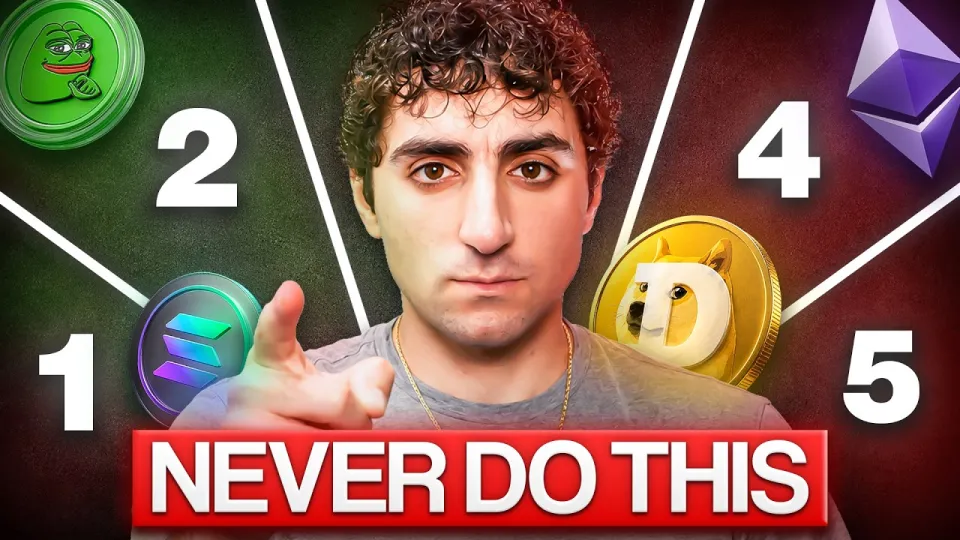
Video: 5 Things I Wish I Knew Before Trading Memecoins (Learn From My Mistakes)
Need articles like this for your video? They help promote it on YouTube and Google — order them in the Telegram bot @sat_sit_bot. Articles with your video embedded are written and posted by the bot itself — on popular topical sites (no ads). Try it free: 50 articles on us.
· based on the channel rasmr
Key takeaways
- Meme coins are driven by attention and liquidity, not cash flow — price can round-trip to zero within hours.
- Most beginner losses come from trading out of boredom, not from bad picks: the market rewards waiting for setups.
- A practical rule is risking no more than 1–2% of the portfolio on a single meme coin position.
- Buying during consolidation beats chasing green candles; confirmation comes from volume and higher lows, not news headlines.
- Thin liquidity means your own exit can crash the price — check pool depth before sizing up.
Meme coin trading is a patience and risk-management game, not a prediction game: most people lose because they size positions too large, buy green candles out of boredom and hold illiquid tokens they cannot exit. Before you trade meme coins, decide in advance how much you can lose, wait for consolidation instead of chasing pumps, and check liquidity and holder distribution on every token. A trading account such as fomo.family registration is only the execution layer — the rules below are what actually protect the portfolio.
The breakdown from the rasmr channel, built around the five mistakes the author wishes he had avoided, lands on the same conclusion that shows up in the comments under it: the people who lost the most were not wrong about a coin, they were bored and overtrading.
Why do most traders lose money on meme coins?
Most losses on meme coins come from behavior, not from analysis: oversized positions, entering after the move has already happened, and holding tokens with no exit liquidity. A meme coin has no earnings, no cash flow and no valuation floor — its price is a function of attention and the depth of the liquidity pool. That changes the rules. In equities you can be early and wait for the thesis to play out; in memes, attention decays fast and the crowd rotates to the next ticker within days.
The second structural problem is dilution. Anyone can launch a token in minutes, so supply is infinite and the marginal buyer is always being competed for by thousands of new launches. When a chart looks like it can only go up, the real question is who is left to buy after you. Traders who treat meme coins as a lottery ticket with a fixed budget survive; traders who treat them as a savings account do not.
The five mistakes worth avoiding before your first trade
These are the practical lessons that separate a survivable meme coin habit from a blown account, framed as rules you can apply on the next trade.
- Trading because you are bored. Sitting in cash feels like doing nothing, so people force entries in chop. A boring day in stablecoins costs nothing; a forced trade in a dead meme costs the position.
- Sizing like it is a blue chip. A token that can drop 80% in an hour cannot carry 30% of your portfolio. Cap single-name risk at 1–2% of capital and treat the rest as already gone once deployed.
- Chasing the candle that already printed. Entering after a vertical move means buying from sellers who are already in profit. The edge is in consolidation, not in the breakout everyone can see.
- Ignoring liquidity and holder concentration. If the pool is thin or a handful of wallets hold most of the supply, your exit is their exit. Check the pool depth and top holders before you size up, not after.
- Having no exit plan. Decide your invalidation level and your first take-profit before entry. If the reason you bought disappears, the position should too — without renegotiating with yourself.
How do you enter a meme coin without chasing the pump?
You enter during consolidation, when price stops making lower highs and volume dries up, rather than during the vertical part of the move. Consolidation is where the market lets you define risk: you can place an invalidation just below the range and know exactly what a wrong trade costs. A breakout on rising volume after a quiet base is a far better entry than a green candle in the middle of nowhere.
Confirmation does not have to be news. In meme markets, "good news" is usually a post that everyone already saw — by the time a headline is public, the move is priced. Better confirmation signals are structural:
- higher lows forming inside the range;
- volume expanding on the breakout candle, not on the wick;
- holder count growing steadily instead of spiking in one hour;
- the pool still deep enough that your planned size is a rounding error.
If none of those are present, the correct action is to wait. Missing a trade costs nothing; taking a bad one costs capital and, worse, discipline.
Risk management rules that keep you in the game
Risk management on meme coins is mostly about pre-commitment: fixed position size, a written invalidation level and a rule for taking profit. Because drawdowns are violent and fast, the only defense that works in real time is one you decided on before the volatility started. A useful structure looks like this:
- Budget first. Set a total amount you are willing to lose across all meme trades and never refill it from savings mid-drawdown.
- Per-trade cap. Risk 1–2% of the portfolio per idea; if the token is illiquid, go smaller, not bigger.
- Scale out. Take partial profit into strength rather than waiting for a single perfect exit that rarely comes.
- Cool-down rule. After two consecutive losses, stop for the day. Revenge trading is how a bad week becomes a bad year.
This is also why the comment section under trading videos is full of the same story: accounts were not destroyed by one bad pick but by a series of bored, oversized, unplanned entries during a quiet market.
What beginners keep getting wrong about meme coin trading
The recurring beginner questions are about timing, patience and how much of a portfolio a meme coin deserves — and the honest answer is usually "less than you think" and "later than you want". New traders often start with a month of experience, make every mistake on the list at once, and then try to flip the result by trading more aggressively, which compounds the problem. The fix is mechanical: smaller size, fewer trades, and a written checklist per position.
Another common confusion is treating community enthusiasm as due diligence. A loud Telegram or a trending hashtag is marketing, not liquidity. The questions that actually matter are unglamorous: how deep is the pool, who holds the supply, what is the token's age, and what happens to price if the top ten wallets sell. Answer those before you answer "how high can it go".
How do you build a repeatable meme coin routine?
A repeatable routine beats intuition because it removes the decision from the moment of maximum emotion. Build a short checklist — liquidity, holder distribution, range structure, invalidation level, position size — and run every candidate through it before any money moves. Keep a log of entries with the reason for the trade; reviewing it after a month exposes patterns like entering late or averaging down into dead tokens.
Then separate research time from execution time. Scanning new launches is fine as a scheduled activity; reacting to a chart in real time is where discipline breaks. Traders who treat meme coins as a small, capped satellite allocation alongside a boring core portfolio are the ones who can keep doing it after a losing streak.
Final thoughts
Meme coin trading is survivable if you treat it as a patience game with strict position sizing, entries during consolidation and an exit plan written before the trade. The rasmr channel's honest framing — learn from someone else's mistakes rather than paying for your own — is the right starting point, and the comments confirm the pattern: boredom, oversizing and no exit rules do the damage, not bad luck. Start small, keep a log, and let the checklist make the decision. When you are ready to execute, you can open an account through the fomo.family sign-up link and keep the first trades at a size that cannot hurt you.
Source: 5 Things I Wish I Knew Before Trading Memecoins (Learn From My Mistakes) · Markdown version
Questions & answers
How much of my portfolio should go into meme coins?
Treat meme coins as a small satellite allocation you can afford to lose entirely, and cap each single position at roughly 1–2% of the portfolio. Because these tokens can drop 80% within hours, the total meme budget should be money whose loss does not change your financial plan.
Should I buy during consolidation or wait for news confirmation?
Consolidation is usually the better entry because it lets you define risk with a clear invalidation level just below the range. News is rarely an edge in meme markets since the crowd sees it at the same time; rising volume, higher lows and steady holder growth are more useful confirmations.
Why do traders lose money even when they pick good coins?
Timing and sizing usually do the damage, not the pick. Buying after a vertical move, holding through a broken structure and oversizing a thin-liquidity token turn a decent idea into a large loss, and boredom-driven overtrading repeats the pattern.
What should I check before buying a new meme coin?
Check liquidity pool depth, the share of supply held by top wallets, the token's age and whether your planned position size is small relative to the pool. If a handful of wallets can crash the price or your exit would move the chart, the trade is too big or the token is too thin.